 Take the First Step
Welcoming a new baby into the world is one of life’s most joyful milestones — and for parents in Singapore, it also quickly raises one of the most pressing practical questions: Where will my child be cared for when I return to work?
Whether you are exploring infant care in Singapore for the very first time, comparing a private kindergarten with a government-affiliated centre, or wondering about areas like infant care in Clementi versus infant care in Tampines, this guide covers everything you need. We walk you through costs, subsidies, developmental milestones, regulations, and exactly how to choose the right centre for your family.
TABLE OF CONTENTS
- What Is Infant Care — and Why It Matters
- Infant Care vs. Childcare vs. Kindergarten in Singapore
- Is Kindergarten Compulsory in Singapore?
- Types of Infant Care & Kindergarten Centres
- Half Day Childcare in Singapore: Is It Right for You?
- Private Infant Care in Singapore: Pros, Costs & What to Expect
- Government Subsidies & Financial Support for Infant Care
- How to Choose the Right Infant Care Centre
- What Your Infant Learns in a Quality Care Programme
- Transitioning from Infant Care to Kindergarten
- Frequently Asked Questions
1. What Is Infant Care — and Why It Matters
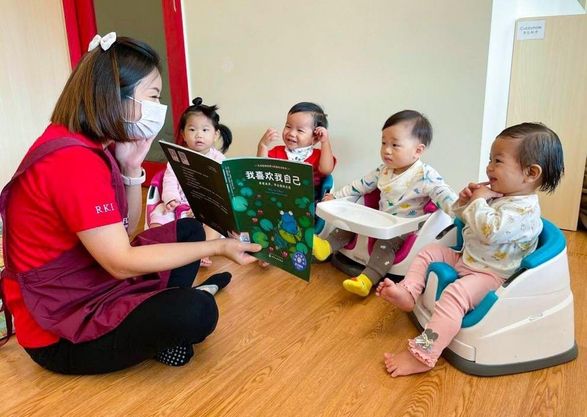
Infant care refers to structured, professional child-minding and early developmental programmes designed for babies aged 2 to 18 months. In Singapore, these programmes are licensed by the Early Childhood Development Agency (ECDA) and must meet stringent safety, hygiene, and caregiver-to-child ratio standards
Unlike informal babysitting or leaving a child with a domestic helper alone, a licensed infant care centre provides a structured daily routine, developmental activities, trained Early Childhood educators, and a safe physical environment purpose-built for very young children. Research consistently shows that high-quality early childhood care and education significantly improves cognitive, social, and emotional development outcomes — and Singapore’s system is among the most well-regulated in Southeast Asia.
Key Insight: In Singapore, the caregiver-to-infant ratio mandated by ECDA is 1:5 for infants (2–18 months). This is one of the most important quality indicators you should verify when visiting any centre.
For working parents — which includes the vast majority of Singaporean dual-income households — infant care also serves a critical practical role: it enables both parents to return to work with confidence, knowing their child is in safe, nurturing hands. With Singapore’s maternity leave extending to 16 weeks (and paternity leave to 2 weeks as of 2026), planning for infant care typically begins during pregnancy itself.
2. Infant Care vs. Childcare vs. Kindergarten in Singapore
Parents often use these terms interchangeably, but understanding the distinctions helps you make a more informed decision for your child’s early years journey.
| Programme Type | Age Range | Typical Hours | Focus |
|---|---|---|---|
| Infant Care | 2–18 months | Full day (7am–7pm) | Nurturing, sensory development, routine |
| Playgroup / Nursery | 18 months–3 years | Half or full day | Play-based learning, socialisation |
| Childcare Centre | 2 months–6 years | Full day (7am–7pm) | Holistic care + structured learning |
| Kindergarten | 4–6 years (K1–K2) | Half or full day | School readiness, literacy, numeracy |
Many comprehensive childcare centres in Singapore run integrated programmes — meaning your child can stay at the same centre from infancy through kindergarten graduation. This continuity is often cited by developmental specialists as a significant advantage, as children thrive in familiar environments with consistent caregivers.
3. Is Kindergarten Compulsory in Singapore?
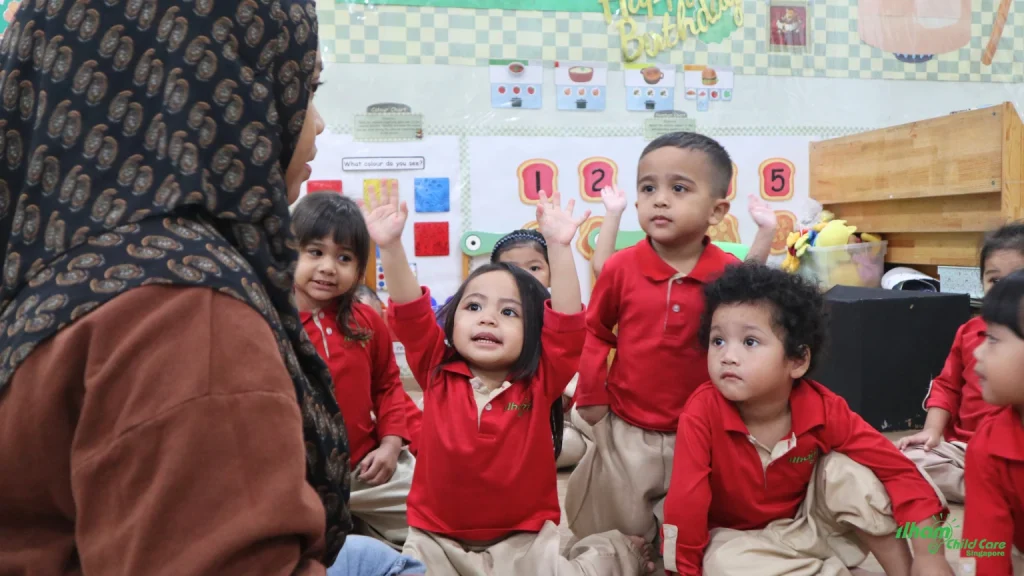
This is one of the most frequently searched questions by new parents in Singapore, and the answer requires some nuance.
Compulsory Education in Singapore applies to primary school (Primary 1 through Primary 6) for Singapore Citizens born on or after 1 January 1996. Under the Compulsory Education Act, all Singapore Citizen children must attend a registered national primary school.
Direct Answer: No, kindergarten is not compulsory in Singapore. However, it is very strongly recommended and near-universally attended. In 2025, over 99% of children who entered Primary 1 had attended some form of pre-school, according to MOE data.
While attendance is not legally mandated, the Ministry of Education (MOE) and ECDA have both made it clear that the pre-school years — particularly the kindergarten years (K1 at age 4, K2 at age 5) — are critical for building foundational literacy and numeracy skills. The Kindergarten Curriculum Framework, developed by MOE, underpins what children learn across all ECDA-licensed kindergartens.
The government also offers Kindergarten Fee Assistance (KiFAS) for lower-income families to reduce financial barriers, further signalling that participation in kindergarten is a national priority even if it is not legally compulsory.
What Happens If You Don’t Send Your Child to Kindergarten?
There are no legal penalties for not attending kindergarten in Singapore. However, children who do not attend pre-school may face a steeper adjustment when entering Primary 1, particularly in language development. Many primary schools conduct their own orientation and foundational support programmes, but pre-school attendance is widely regarded as the best preparation.
4. Types of Infant Care & Kindergarten Centres in Singapore
Singapore’s early childhood landscape includes a diverse mix of operators, each with their own pedagogical philosophy, pricing structure, and target audience. Understanding these categories helps you shortlist centres that align with your family’s values and budget.
4.1 Government-Affiliated & Anchor Operators
Anchor Operators (AOs) are large-scale, non-profit pre-school providers supported by the government to offer quality, affordable childcare. Major Anchor Operators include NTUC First Campus (My First Skool), PAP Community Foundation (PCF Sparkletots), and Presbyterian Community Services (PCS). These centres receive government grants and in turn cap their fees within regulated limits, making them accessible to middle-income families.
4.2 Partner Operators
Partner Operators (POs) are smaller providers who partner with the government and also receive subsidies. They may have slightly higher fees than AOs but often offer more specialised programmes or smaller class sizes.
4.3 Private Infant Care Centres
Private infant care centres operate independently and set their own fees, which are generally higher than AOs or POs. However, many private centres offer more premium facilities, lower caregiver-to-child ratios, bilingual programmes, enrichment activities, and bespoke learning philosophies such as Reggio Emilia, Montessori, or Waldorf approaches.
4.4 MOE Kindergartens
MOE Kindergartens (MK) are run directly by the Ministry of Education and are housed within primary school compounds. They serve K1 and K2 children only (ages 4–6). MK fees are among the lowest in Singapore for Singapore Citizens, and the programme is designed to prepare children directly for the primary school environment.
4.5 Private Kindergartens
A private kindergarten in Singapore is a non-government-funded kindergarten offering K1 and K2 classes. These are typically associated with enrichment-oriented curricula, international-flavoured programmes, or faith-based education. Private kindergartens often attract families seeking a specific educational philosophy or language immersion (e.g., Mandarin, French, or Japanese).
5. Half Day Childcare in Singapore: Is It Right for You?
Half day childcare in Singapore is an increasingly popular arrangement, particularly for families where one parent works part-time, from home, or follows a flexible schedule. Half day programmes typically run either in the morning (7am–1pm) or afternoon (1pm–7pm) and cost significantly less than full-day enrolment.
💡 Tip: If you opt for half day childcare, check whether your chosen centre offers a seamless transition to full-day care if your situation changes — without requiring a new application or losing your child’s spot.
Who Benefits Most from Half Day Childcare?
- Families with a stay-at-home parent or grandparent supplement
- Parents who work part-time or have flexible work-from-home arrangements
- Parents who want a gentle introduction to centre-based care for younger toddlers
- Families prioritising more parent-child time in the mornings or evenings
6. Private Infant Care in Singapore: Pros, Costs & What to Expect
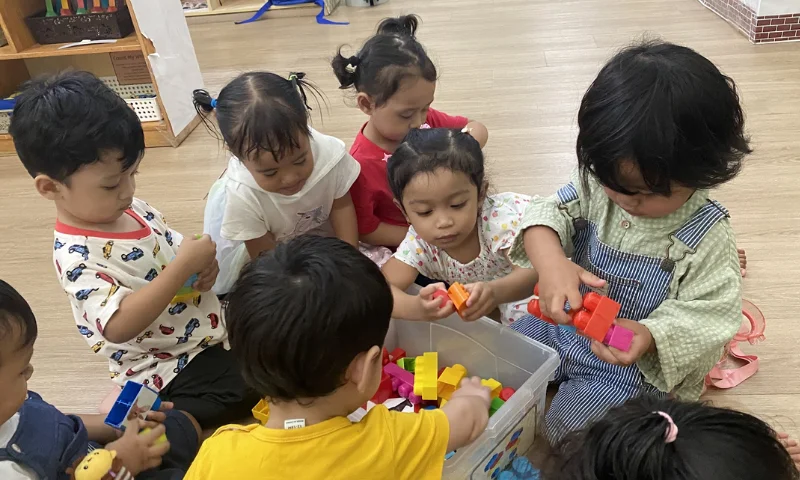
Private infant care in Singapore refers to infant care centres that do not receive government anchor operator funding. While their fees are higher, many families choose them for the following reasons:
- Lower caregiver-to-infant ratios — many private centres go beyond the ECDA minimum of 1:5, offering 1:3 or even 1:2
- Specialised pedagogical approaches — Reggio Emilia, Montessori, RIE (Resources for Infant Educarers), and play-based frameworks
- Premium facilities — sensory rooms, outdoor play spaces, hydrotherapy areas, sleep pods
- Bilingual or multilingual programmes — Mandarin immersion, English-Malay, or trilingual environments
- Smaller class sizes and more personalised attention
- Extended hours or flexible scheduling
Typical Fees for Private Infant Care in Singapore (2026)
| Type of Centre | Monthly Fee (Before Subsidy) | After Basic Subsidy (Citizen) |
|---|---|---|
| Anchor Operator (e.g., My First Skool) | $900 – $1,300 | $400 – $800 |
| Partner Operator | $1,200 – $2,200 | $700 – $1,600 |
| Private Infant Care Centre | $2,000 – $4,500+ | No subsidy cap benefit |
| MOE Kindergarten (K1/K2 only) | $150 – $200/month | May qualify for KiFAS |
Important Note: ECDA subsidies (Basic Subsidy + Additional Subsidy) apply only to infants enrolled in licensed childcare centres with fees at or below the subsidy cap. Most private infant care centres charge above this cap, meaning the full fee is payable by the family. Always confirm subsidy eligibility with the centre before enrolling.
Is Private Infant Care Worth the Cost?
This is ultimately a personal and financial decision. Families who choose private infant care in Singapore often cite peace of mind, programme quality, and caregiver consistency as their top reasons. If budget allows, the enriched environment of a premium centre can provide exceptional early stimulation during the critical first 18 months of brain development — a window neuroscientists describe as uniquely formative.
7. Government Subsidies & Financial Support for Infant Care in Singapore
One of Singapore’s most significant advantages for young families is the comprehensive subsidy framework for infant care and childcare. Understanding this framework can reduce your monthly costs substantially.
8.1 Basic Subsidy
All Singapore Citizen children enrolled in a licensed childcare centre are eligible for the Basic Subsidy, regardless of household income. As of 2026:
- Infant care (2–18 months, full day): up to $600/month
- Childcare (18 months–6 years, full day): up to $300/month
- Half day programmes receive proportionally lower Basic Subsidy amounts
8.2 Additional Subsidy (Means-Tested)
Families with a per capita household income (PCHI) below $12,000/month may qualify for the Additional Subsidy, which is tiered according to income. Lower-income families can receive up to an additional $710/month for infant care, making the effective monthly fee as low as $0–$15 for Singapore Citizen infants at Anchor Operator centres.
8.3 Child Development Account (CDA)
The CDA is a special savings account for Singapore Citizen children. The government matches dollar-for-dollar contributions up to a cap, and CDA funds can be used directly to offset infant care fees at all ECDA-licensed centres. Maximising your CDA contributions (and receiving the First Step Grant of $5,000 for babies born from 2023 onward) is one of the smartest financial moves for new parents.
8.4 Kindergarten Fee Assistance Scheme (KiFAS)
For families enrolling children in kindergarten, the KiFAS scheme provides monthly fee assistance of up to $170 for families earning below $3,000 per month (PCHI). MOE Kindergartens also offer some of the lowest baseline fees in the country.
Pro Tip: Apply for subsidies before your child’s enrolment date. ECDA processes subsidy applications, and delays can result in you paying full fees for the first month or two. Keep all income documents ready.
9. How to Choose the Right Infant Care Centre in Singapore
With hundreds of licensed infant care and childcare centres across the island, narrowing down your options requires a structured approach. Here is a proven framework used by early childhood consultants and seasoned Singaporean parents alike.
Step 1: Define Your Non-Negotiables
- Location — within walking distance, near MRT, or en route to workplace?
- Hours — does the centre’s operating hours match your work schedule?
- Language — English-only, bilingual (English-Mandarin), or immersion?
- Curriculum philosophy — play-based, structured academics, Montessori, Reggio Emilia?
- Budget — including subsidies, what can you realistically afford monthly?
Step 2: Research ECDA’s Centre Licensing Records
All licensed infant care and childcare centres in Singapore are listed on the ECDA MSF Childcare Centre Locator. You can verify a centre’s licensing status, any regulatory actions, and whether the centre qualifies for government subsidies. Never enrol your child in an unlicensed centre.
Step 3: Visit the Centre in Person
A tour tells you more than any brochure. During your visit, observe:
- Caregiver-to-infant ratio — are caregivers engaged and responsive?
- Hygiene standards — diaper changing stations, sleeping areas, feeding areas
- The emotional tone — do caregivers speak warmly to the children?
- Physical environment — safe, stimulating, age-appropriate materials?
- Safety protocols — CCTV, visitor sign-in, emergency procedures
- Caregiver qualifications — ask about ACEY (Associate Certificate in Early Years) or higher qualifications
Red Flag: High caregiver turnover, caregivers distracted by phones during interactions with infants, overly rigid schedules with no responsive feeding, strong chemical smells, or reluctance to answer questions transparently.
Step 4: Review Parent Feedback
Check Google Reviews, SchoolAdvisor Singapore, and parent community forums such as KiasuParents.com. Look for patterns in feedback — a single negative review may be an outlier, but consistent concerns about communication, hygiene, or caregiver warmth warrant attention.
10. What Your Infant Learns in a Quality Care Programme
Parents sometimes worry that placing a young baby in a care centre reduces the quality of bonding and development. However, research from Harvard University’s Center on the Developing Child, the National Institute of Child Health, and multiple Singapore-based longitudinal studies shows that high-quality infant care actually supports healthy development — particularly when the centre uses responsive caregiving practices.
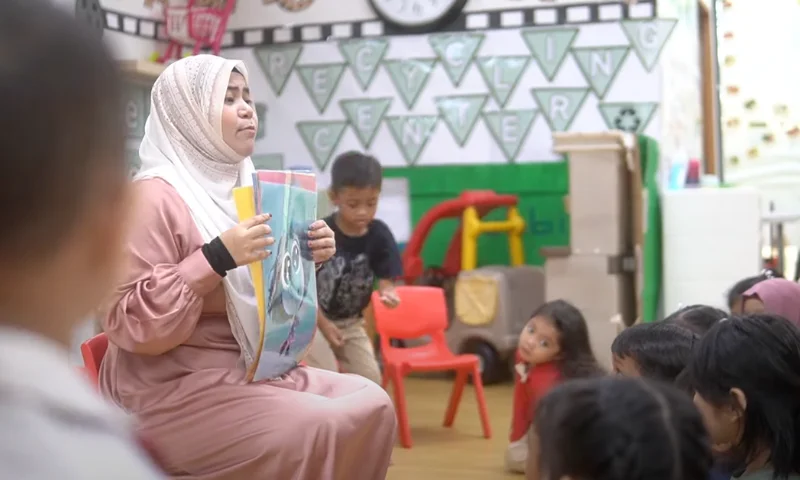
Key Developmental Domains Addressed in Infant Care
- Cognitive Development: Sensory exploration, cause-and-effect play, object permanence activities, visual tracking exercises
- Language & Communication: Responsive talking, reading aloud, singing, naming objects and feelings — exposure to rich language is critical in the first 18 months
- Motor Development: Tummy time, supported sitting, reaching, grasping, crawling spaces and pull-to-stand stations
- Social-Emotional Development: Secure attachment with consistent caregivers, parallel play with peers, emotional co-regulation
- Self-Help Skills: Feeding routines, sleep-wake cycles, early independence in feeding (spoon introduction from 6 months)
Final Thoughts: Making the Right Choice for Your Family
Navigating infant care in Singapore can feel overwhelming at first — but armed with the right knowledge, the process becomes far more manageable. From understanding the difference between anchor operators and private infant care, to knowing your subsidy entitlements, to evaluating whether half day childcare fits your lifestyle, the most important thing is to start early and trust your instincts during centre visits.
Whether you settle on an infant care centre in Clementi, Tampines, or anywhere else in Singapore, prioritise warmth, safety, and responsive caregiving above all else. The curriculum matters — but the quality of the relationship between your baby and their caregiver matters even more in these precious early months.
As your child grows from an infant into a toddler and then into a kindergarten student, Singapore’s early childhood ecosystem — one of the most well-supported in Asia — will continue to provide excellent options at every stage. Plan ahead, ask questions, and remember: you are making one of the most important investments in your child’s future.