 Take the First Step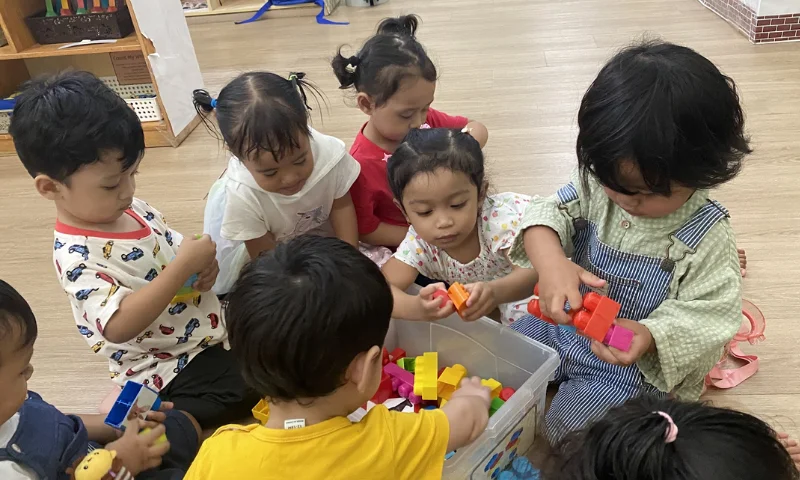
Every parent wants the best for their child. But when it comes to early education, the question is not just which school to choose — it is when learning truly begins. The science is clear: the answer is from birth.
Early childhood education (ECE) covers the learning, care, and development of children from birth to age 6. These years are the most biologically significant in a human life. During this window, the brain develops faster than at any other time — forming connections, building language, and laying the emotional foundations that will shape your child’s entire future.
In Singapore, understanding what quality early childhood education looks like — and why it matters — is the first step every parent should take before enrolling their child in any centre. This guide explains the science, what to look for, and how the right environment gives children an irreversible head start.
What Is Early Childhood Education?
Early childhood education is the formal and informal learning that happens during the earliest years of life — typically from birth to age 6, covering infancy, toddlerhood, the playgroup stage, nursery, and kindergarten years.
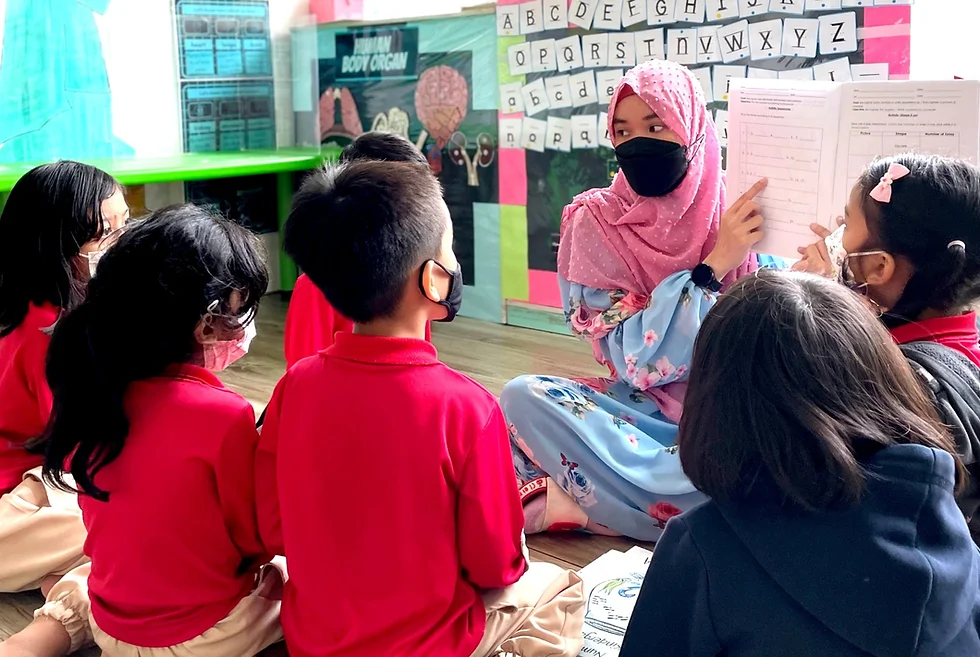
ECE is not simply childminding. At its best, it is a structured programme designed to develop children across six core domains:
- Cognitive development — thinking, problem-solving, numeracy, and early literacy
- Language and communication — speaking, listening, reading readiness, and multilingual acquisition
- Social and emotional learning — empathy, self-regulation, forming friendships, and managing emotions
- Physical development — gross motor skills (running, climbing) and fine motor skills (drawing, cutting)
- Creative development — imagination, art, music, and dramatic play
- Moral and values development — character, respect, responsibility, and in Islamic settings, spiritual grounding
The best early childhood programmes address all six domains simultaneously. No single domain operates in isolation — a child learning to share a toy is developing social skills, emotional regulation, and moral reasoning at the same moment.
The Science of the First 6 Years: Why This Window Is Irreplaceable
Rapid Brain Development: 1 Million Neural Connections Per Second
The most important fact in developmental science is this: from birth to age 3, the human brain forms approximately 1 million new neural connections every single second. This rate is never repeated in human life.
According to Harvard University’s Centre on the Developing Child, early childhood experiences physically shape the architecture of the brain. Positive, responsive, and stimulating environments build strong neural pathways. Neglect or lack of stimulation can impair these pathways in ways that are difficult to reverse later. [Source: Harvard Center on the Developing Child, developingchild.harvard.edu]
By age 5, approximately 90% of brain architecture is in place. This is not a metaphor — it is neurobiology. The circuits built in these early years govern attention, language, emotional control, and reasoning for life.
Critical Periods for Language Acquisition
Linguistics research consistently shows that children are most receptive to learning new languages between birth and age 7 — with the window for native-level phonological acquisition largely closing around age 5. Children in multilingual environments during this period do not simply learn multiple words; they develop multiple full language systems simultaneously.
A landmark study published in the journal Developmental Science (Kuhl et al., 2005) demonstrated that infants as young as 6 months old are already ‘tuning in’ to the phonemes of their mother tongue and beginning to filter out sounds from other languages. Early multilingual exposure during this period preserves the brain’s ability to distinguish sounds across languages. This is why a programme offering English, Malay, Mandarin, and Arabic instruction — as Ilham Childcare does from the earliest years — is not a luxury add-on. It is a scientifically grounded approach to capitalising on the most powerful learning window in a child’s life.
Emotional Regulation and the Social Brain
The amygdala, which processes emotions and stress responses, and the prefrontal cortex, which governs decision-making and impulse control, are both shaped profoundly during early childhood. Research from the National Scientific Council on the Developing Child shows that children who experience warm, consistent caregiving in early years demonstrate better stress regulation, stronger executive function, and greater resilience under pressure throughout their lives.
This is why the teacher-to-child ratio, the emotional environment of a centre, and the relationship between educators and children are as important as the academic curriculum.
Long-Term Outcomes: The Research Is Compelling
The evidence for long-term returns on quality early education is among the strongest in all of social science:
- The Perry Preschool Project (Schweinhart et al., 2005) followed children for 40 years. Those who attended quality preschool had higher earnings, lower crime rates, and better health outcomes as adults.
- Nobel Prize-winning economist James Heckman calculated that every dollar invested in quality early childhood education returns US$7 to $12 in economic benefits to society through reduced remediation, crime, and welfare costs.
- A 2019 OECD report found that children who attended at least one year of quality early education performed significantly better in reading and mathematics at age 15, regardless of socioeconomic background.
- The UK’s EPPE Project (Sylva et al., 2004) — the largest ECE longitudinal study in Europe — found that the quality of the preschool environment was the single strongest predictor of cognitive and social outcomes at school entry.
What Does a High-Quality Early Childhood Programme Look Like?
Not all early childhood programmes are equal. Research consistently identifies the following as markers of genuinely high-quality ECE:
| Quality Indicator | What to Look For |
|---|---|
| Curriculum framework | Structured, evidence-based, and aligned with ECDA’s Singapore Preschool Curriculum Framework |
| Teacher qualification | ECDA-certified educators with DECCE-T or higher qualifications |
| Teacher-to-child ratio | 1:5 for infants, 1:8 for toddlers, 1:15 for K1/K2 — lower is better |
| Language environment | Rich, multi-language interactions, not passive screen exposure |
| Play-based learning | Purposeful play that develops all six developmental domains |
| Social-emotional learning | Explicit teaching of empathy, emotional vocabulary, and conflict resolution |
| Family partnership | Regular communication, transparent reporting, and parental involvement |
| Safety and nutrition | ECDA-licenced premises, healthy meals, and documented health protocols |
Singapore’s Early Childhood Development Agency (ECDA) sets mandatory standards for all registered preschools and childcare centres, including curriculum frameworks, physical safety requirements, and teacher qualifications. Parents should always verify ECDA registration before enrolling.
The Singapore Context: Why ECE Is Central to National Policy
Singapore is internationally recognised for its commitment to early childhood education. The government’s Early Childhood Development Agency (ECDA) oversees all childcare and preschool settings, and Singapore’s preschool enrolment rate among 3-to-6-year-olds is among the highest in Asia.
Key policy pillars include:
- The Nurturing Early Learners (NEL) framework — Singapore’s national ECE curriculum, emphasising holistic development across all domains
- KidSTART — a targeted programme to support children from lower-income families with high-quality ECE from birth
- Child Development Account (CDA) — a government co-savings scheme to help families fund quality childcare
- Childcare subsidies — means-tested Basic and Additional Subsidies reducing monthly fees significantly for eligible families
Singapore’s investment in ECE reflects the global scientific consensus: the earlier children receive quality care and stimulation, the better their lifelong outcomes
The Ilham Childcare Approach: Holistic, Multilingual, and Values-Centred
At Ilham Childcare, early childhood education is understood in its fullest sense: not as academic preparation alone, but as the development of the whole child — mind, body, language, character, and soul.
Ilham’s approach integrates several evidence-based methodologies:
Multilingual Instruction from the Earliest Years
Ilham offers instruction in four languages — English, Malay, Mandarin, and Arabic — from Playgroup onwards. This multilingual environment capitalises directly on the critical language acquisition window, building neural pathways for lifelong linguistic competence.
Play-Based and Thematic Learning
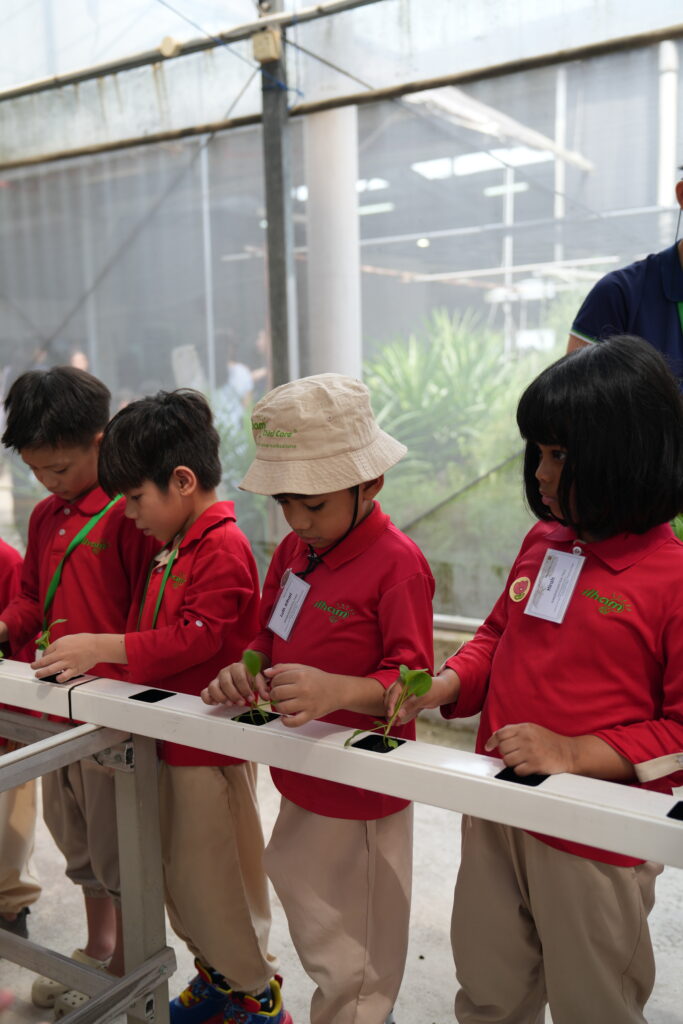
Ilham’s curriculum uses thematic learning, where concepts are explored through interconnected, cross-curricular activities. Alongside formal learning, children engage in Jolly Phonics for reading, Montessori activities for self-directed learning, and Messy Play for sensory-motor development — all grounded in developmental science.
Nine Enrichment Programmes, All Included
Ilham’s nine complimentary enrichment programmes — including Speech and Drama, Show and Tell, and Martial Arts — address the creative, physical, and communicative domains that standard curricula often underprovide. Research consistently shows that arts-integrated learning improves outcomes across academic subjects.
Islamic Values and MUIS Certification
All Ilham centres are certified under MUIS’s Islamic Education Childcare Programme (IECP). The integration of Islamic values — daily duas, huruf hijaiyyah, surah memorisation, and core moral tenets — builds the spiritual and ethical foundation that Muslim families prioritise alongside academic excellence.
Madrasah Preparatory Programme
From Nursery 2, Ilham prepares children for the Madrasah entrance examination through structured Arabic literacy, mock tests, and targeted skill-building — removing a significant source of stress for Muslim families planning their child’s educational path.

At what age should my child start early childhood education?
Research supports the earliest possible quality care. Ilham accepts infants from 2 months in its infant care programme and offers Playgroup from 18 months. The earlier a child enters a high-quality environment, the greater the accumulated developmental benefit.
Is play-based learning as effective as structured academic teaching?
Yes — for early childhood, the evidence strongly favours play-based approaches. A landmark meta-analysis by Lillard et al. (2013) published in Psychological Bulletin found that play-based learning produces equivalent or superior outcomes in literacy and numeracy compared to direct academic instruction for children under 6, while additionally developing executive function and creativity.
Does attending a multilingual preschool confuse children?
No — this is one of the most persistent myths in early education. The science is unambiguous: children’s brains are uniquely equipped to manage multiple language systems simultaneously during early childhood. Bilingual and multilingual children actually demonstrate enhanced executive function compared to monolingual peers (Bialystok et al., 2012, Psychological Science).
Ready to Give Your Child the Best Start?
Ilham Childcare has been recognised as the Best Holistic Childcare Provider 2024 in Singapore by APAC Insider. With centres across Boon Lay, Ubi, Tampines, Woodlands, Punggol, Hougang, and Yishun, quality early childhood education is never far from home.
Visit ilhamchildcare.com to book a personalised tour. See the environment, meet the educators, and discover why thousands of Singapore families trust Ilham with their child’s most important years.
CITATIONS
1. Harvard Center on the Developing Child. (2023). Brain Architecture. developingchild.harvard.edu/science/key-concepts/brain-architecture/
2. Kuhl, P.K. et al. (2005). Links between social and linguistic processing of speech in preschool children. Science, 307, 111-114.
3. Heckman, J.J. (2006). Skill formation and the economics of investing in disadvantaged children. Science, 312(5782), 1900-1902.
4. Schweinhart, L.J. et al. (2005). Lifetime Effects: The High/Scope Perry Preschool Study Through Age 40. Monographs of the High/Scope Educational Research Foundation.
5. Sylva, K. et al. (2004). The Effective Provision of Pre-School Education (EPPE) Project. DfES Research Brief RBX15-03. London: DfES.
6. OECD. (2019). PISA 2018 Results (Volume V): Effective Policies, Successful Schools. Paris: OECD Publishing.
7. Lillard, A.S. et al. (2013). The impact of pretend play on children’s development: A review of the evidence. Psychological Bulletin, 139(1), 1-34.
8. Bialystok, E. et al. (2012). Bilingualism: consequences for mind and brain. Trends in Cognitive Sciences, 16(4), 240-250. 9. National Scientific Council on the Developing Child. (2019). Young Children Develop in an Environment of Relationships. Harvard University.