 Take the First Step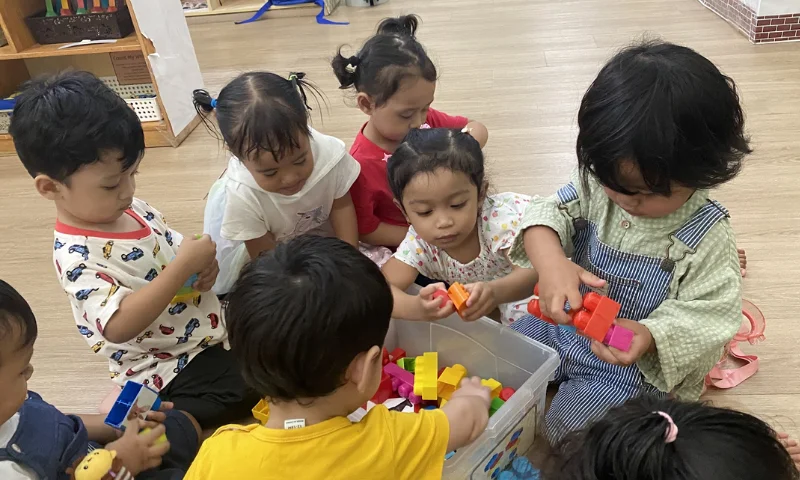
The Question Singapore Parents Ask Us Every Week
Should I enrol my preschooler in enrichment classes? Which ones are worth it? Will my child fall behind if I don’t?
If you have asked any version of these questions, you are in very good company. Singapore’s enrichment market is large, well-marketed, and — if we are honest — often designed to make parents feel that more is always better. Piano at three. Coding at four. Phonics drills, abacus, robotics, and Mandarin tuition before Primary 1.
As educators who work with preschoolers every single day, we want to give you an honest answer. Not a sales pitch for more classes. An answer grounded in what early childhood research actually tells us — and in what genuinely makes a difference for children at this age.
We will also share something that often surprises parents who are new to Ilham Childcare: by the time many families start searching for enrichment programmes, their children are already experiencing nine of them, every day, at no extra cost.
What Enrichment Actually Means at Preschool Age
In the context of early childhood education, ‘enrichment’ refers to structured learning experiences designed to develop specific skills or competencies — whether offered externally or embedded within a school curriculum. In Singapore, common categories include:
- Language: Phonics, Mandarin, Malay, Arabic reading and conversation programmes
- Performing arts: Speech and drama, music, movement, and creative arts
- Physical development: Swimming, gymnastics, martial arts, dance, and movement-based programmes
- Technology and early STEM: Coding, robotics, and digital literacy programmes
- Academic preparation: Reading readiness, writing, numeracy drills, and school prep classes
Each category comes with a different evidence base, different developmental benefits, and — critically — very different levels of age-appropriateness depending on how they are delivered.
What the Research Tells Us About Enrichment for Young Children
The honest summary of what early childhood research shows: enrichment works — when it is delivered in age-appropriate ways, by skilled facilitators, and without replacing the free play and rest children need to thrive. The problem is not enrichment itself. The problem is how it is chosen, how it is delivered, and how much of it a child’s week can absorb before it starts working against them.
The Strong Case: What Quality Enrichment Does for Young Children
Well-designed enrichment at preschool age supports development across multiple domains simultaneously. A quality music programme, for example, builds phonemic awareness (a foundational pre-reading skill), mathematical reasoning, working memory, and emotional regulation — all at once, all through the medium of joy and play. A quality movement programme builds gross motor development, spatial reasoning, body confidence, and self-regulation.
The research is consistent: the best enrichment is not about drilling content. It is about giving children rich, varied, joyful experiences through which development happens naturally. The quality of delivery matters far more than the subject category.
The Important Caveat: More Is Not Better
Here is where the research is equally clear, and where many Singapore parents need honest reassurance: over-scheduling young children — filling every afternoon and weekend with structured classes — can actively undermine the development parents are trying to support.
Young children’s brains need unstructured time. Not as a nice-to-have, but as a neurological necessity. Free play is how children process experience, develop imagination, build resilience, and consolidate everything they have learned in formal settings. When this time is crowded out, children lose the very capacity that enrichment is trying to build.
💡 Parent Insight: A landmark report by the American Academy of Pediatrics found that reducing free play in early childhood is a genuine developmental concern — not merely a lifestyle preference. Protecting your preschooler’s unstructured time is one of the most evidence-aligned choices you can make.
The practical implication for Singapore families: a child with one or two enrichment activities they genuinely love, and plenty of free time at home, will typically develop more fully than a child whose every hour is structured. Choosing well matters more than choosing more.
An Honest Assessment of Each Enrichment Category
🎵 Music and Movement — Strongly Supported
Music enrichment has one of the strongest evidence bases of any preschool-age activity. Studies consistently link music training in early childhood to stronger phonological awareness, improved mathematical reasoning, better working memory, and enhanced emotional regulation. Movement programmes — dance, gymnastics, martial arts — support gross motor development, body awareness, coordination, and crucially, self-regulation.
✅ Worth It: High-quality music and movement enrichment, where children are active and joyful participants rather than passive performers, delivers genuine and wide-reaching developmental benefits.
🎭 Speech and Drama — Highly Valuable
Speech and drama for preschoolers is significantly underrated in Singapore’s enrichment conversation, which tends to focus on academic preparation. A well-run speech and drama programme builds vocabulary, narrative thinking, emotional intelligence, public confidence, and communication skills — all through play-based creative activity. These are precisely the competencies that predict strong language and literacy outcomes at primary school and beyond
✅ Worth It: Speech and drama is one of the most developmentally powerful enrichment formats for preschool-age children when delivered in a creative, play-centred way.
🈳 Language Enrichment — Valuable with the Right Approach
Singapore’s multilingual environment means that many families are genuinely motivated to support their child’s development in Mandarin, Malay, or Arabic alongside English. The neuroscience of early language acquisition is encouraging: young children are wired for language learning in ways that older learners are not. Early exposure to a second or third language, when it happens through rich, meaningful interaction, song, and storytelling, delivers real and lasting benefits.
The critical qualifier: language acquisition at preschool age is most effective through immersive, contextual, play-based experiences — not through rote drilling, worksheet-heavy practice, or performance pressure. A programme that teaches Mandarin through stories, games, and songs will consistently outperform one focused on character writing for a four-year-old.
Martial Arts — More Valuable Than Many Parents Expect
Martial arts is often dismissed as a niche enrichment category, but for preschoolers the developmental case is strong. Quality martial arts programmes for young children build discipline, focus, body awareness, confidence, and respect for others — values that translate directly into classroom and social settings. The structured, incremental nature of martial arts progression also builds a growth mindset: children learn that consistent effort leads to improvement.
✅ Worth It: Martial arts, delivered through a programme designed specifically for young children, offers developmental benefits that extend well beyond the physical.
👩🍳 Cookery and Sensory Experiences — Underestimated Powerhouses
Cookery and sensory enrichment — including messy play, loose parts play, and hands-on food preparation — are among the most developmentally rich experiences available to preschoolers. They support fine motor development, mathematical thinking (measurement, sequencing, cause and effect), scientific reasoning, language development, and executive function, all within a highly motivating, real-world context.
These are not ‘fun extras.’ Research in early childhood consistently highlights the depth of learning that occurs through sensory and hands-on experience. They also tend to be the activities children talk about most excitedly at home — which is itself a meaningful signal.
💻 Technology and Coding — Proceed Thoughtfully
Early technology enrichment has grown rapidly in Singapore, with coding and robotics programmes now available for children as young as three. The evidence base here is thinner than for music or physical enrichment, and quality varies widely. Well-designed early STEM experiences — using physical, tactile materials and focused on curiosity and problem-solving — can support logical thinking and scientific reasoning.
However, screen-heavy or highly abstract programmes for children under five have limited evidence of meaningful developmental return. If you are considering STEM enrichment, prioritise programmes that are hands-on, physical, and driven by the child’s genuine curiosity rather than parental aspiration.
⚠️ Be Cautious: Digital coding programmes for children under five that are screen-heavy have a weak evidence base. Look for physical, hands-on STEM experiences instead — and trust your child’s enthusiasm as your best indicator.
📝 Academic Acceleration — The Most Important Category to Get Right
This is where the research is most directly relevant to a decision with real stakes for Singapore parents.
There is strong longitudinal evidence that heavy academic drilling — intensive phonics, writing, and numeracy drills — before children are developmentally ready may produce short-term performance gains but is associated with diminished motivation, increased anxiety, and a reduced love of learning by the middle primary years. The goal of preschool enrichment is not to pre-teach Primary 1 content. It is to build the foundational capacities — curiosity, confidence, language, executive function — that make all future learning possible.
This does not mean phonics and early numeracy have no place at preschool age. Programmes like Jolly Phonics, which teach literacy through multi-sensory, active, and joyful methods, are well-evidenced and appropriate. The distinction is between enrichment that follows the child’s developmental readiness and enrichment driven by parental anxiety about school preparation.
⚠️ Watch for Red Flags: Worksheets, homework, and performance pressure for preschoolers are indicators that a programme is prioritising parental reassurance over what genuinely benefits the child.
Something Every Ilham Family Should Know: The Enrichment Is Already There
Here is something that genuinely surprises many families when they first enquire with us.
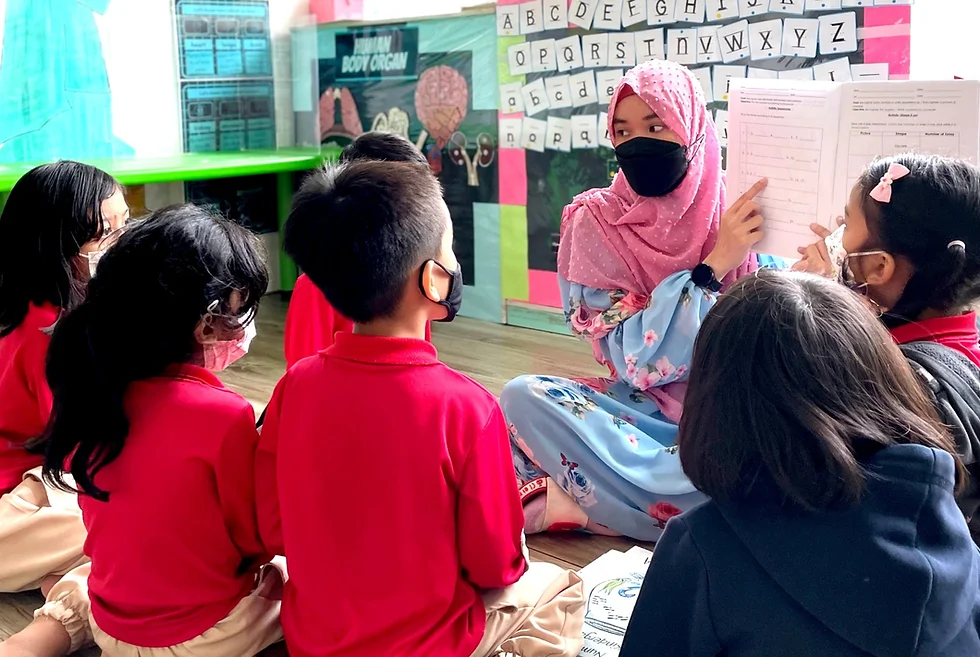
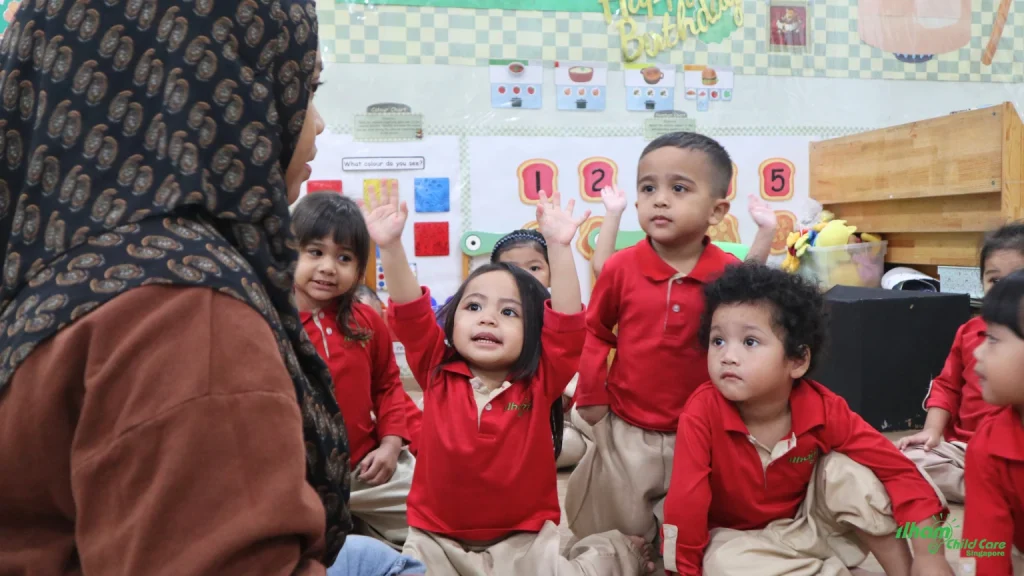
At Ilham Childcare, every child — from Playgroup through Kindergarten 2 — is already enrolled in nine complementary enrichment programmes. They are built into the curriculum. They run every day. And they are included in your fees at no additional cost, as part of our commitment to the #YourChildNeverWalksAlone philosophy.
This is not a marketing claim. It is the structure of how we deliver early childhood education. We believe that quality enrichment is not a premium add-on for families who can afford it — it is what every child deserves, and it should be part of every preschool day.
Ilham’s 9 Complimentary Enrichment Programmes — What Your Child Already Has
| Enrichment Programme | Age Group | What It Develops |
|---|---|---|
| Jolly Phonics Reading Programme | Playgroup, N1 through K2 | Literacy through multi-sensory phonics — actions, songs, and play for 42 letter sounds. Builds strong reading and writing foundations |
| Montessori | Infants & Playgroup / N1 | Self-directed, hands-on learning with self-correcting materials. Builds independence, concentration, and fine motor skills |
| Music & Movement | All levels | Phonemic awareness, mathematical thinking, emotional regulation, body coordination — all through music and joyful movement |
| Smart | All levels | Gross motor development, body awareness, physical confidence, and self-regulation through structured physical activity |
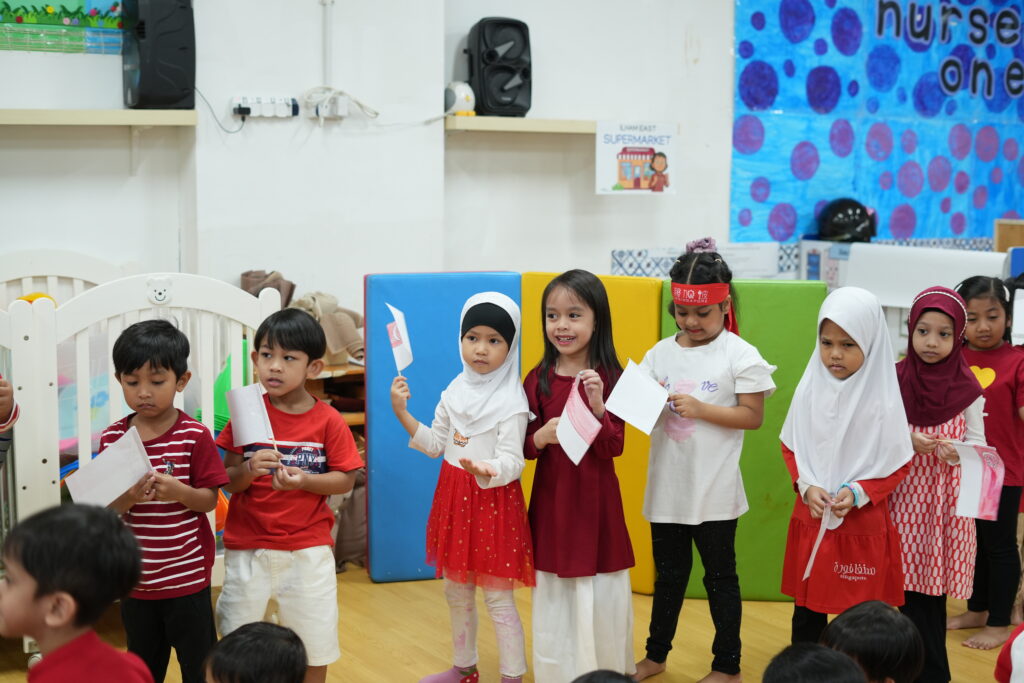
| Speech & Drama (in-house custom programme) | N1 through K2 | Vocabulary, narrative thinking, public confidence, emotional intelligence, and communication through creative play |
| Art & Craft | All levels | Fine motor development, creative thinking, self-expression, and visual literacy through hands-on artistic exploration |
| Cookery | Playgroup / N1 through K2 | Mathematical thinking (measurement, sequencing), scientific reasoning, fine motor skills, and real-world problem-solving |
| Messy and Loose Play | Infants through N1 | Sensory development, creativity, open-ended exploration with sand, water, fabrics, and natural materials |
| Information Communication Technology (ICT) | N2 through K2 | Digital literacy, early logical thinking, and purposeful technology use in an age-appropriate, supervised setting |
For Nursery 2 through Kindergarten 2, the Malay Immersion Programme and Show and Tell sessions are also integrated, supporting cultural identity, mother tongue development, and confident self-expression alongside the above. For infants, Baby Massage and Baby SPA sessions support sensory stimulation, physical development, and the caregiver-infant bond — from the very beginning of a child’s time with us
🌟 This is what we mean when we say enrichment is not an add-on at Ilham — it is the curriculum. A child who attends Ilham five days a week is receiving music, phonics, physical movement, dramatic arts, creative arts, cookery, sensory exploration, and technology literacy every single week, all included, all purposefully designed.
Four Languages, Every Day — Also Included
Beyond the nine enrichment programmes, every child at Ilham Childcare receives daily instruction in four languages: English, Malay, Mandarin, and Arabic. This multi-language immersion is delivered as part of the standard curriculum — not as an optional extra — and is designed to build genuine communicative competence in all four languages through contextual, relationship-rich instruction. For Singapore families, this is significant. The combination of four-language daily learning with nine enrichment programmes, delivered within a structured holistic curriculum, means that the question for most Ilham families is not ‘should I find enrichment for my child?’ — it is ‘what, if anything, should I add on top of what they are already receiving?
So Should You Add External Enrichment on Top?
Our honest answer, based on years of working with Singapore preschoolers and their families: for most children enrolled in a genuinely holistic preschool programme, the developmental case for stacking additional external enrichment on top is weaker than the market would have you believe.
This does not mean external enrichment is wrong. It means that the right question is not ‘which enrichment should I add?’ but rather:
- Is my child’s preschool programme already genuinely rich and holistic? If yes — and if your child is thriving, engaged, and happy — the marginal return from additional classes is likely modest.
- Does my child have a strong genuine interest in something that is not already in their school day? A child who lights up around water would benefit enormously from swimming. A child who is obsessed with building could thrive in a quality hands-on STEM programme. Follow genuine curiosity.
- Does my child have enough unstructured free time? Before adding anything, protect this. A child who arrives home tired from a full preschool day and then goes immediately to enrichment classes is not thriving — they are being over-scheduled.
- Am I choosing this for my child, or for my own peace of mind? This is the most important question of all. Honest self-reflection here protects both your child and your family’s wellbeing.
What to Look for if You Do Choose External Enrichment
If you decide to add one or two external enrichment activities to your preschooler’s week, here is a practical framework for evaluating any programme:
- Visit a trial class and watch the children, not the brochure. Are children laughing, curious, and engaged? Is the educator warm and responsive? These are your real quality indicators.
- Look for play-based delivery. For children under six, any enrichment worth its fees delivers content through play, song, movement, and story — not drills, worksheets, or performance pressure.
- Trust your child’s reaction above all else. A child who runs into class and talks about it excitedly at home is benefiting. A child who resists going, seems tired, or seems stressed is telling you something important.
- Check the educator-to-child ratio. Small ratios enable the individual attention that genuinely supports development at this age.
- Protect at least two to three unscheduled afternoons per week. This is non-negotiable for healthy development. It is not laziness — it is the most evidence-backed investment you can make in your child’s wellbeing.
Red Flags to Watch for When Evaluating Enrichment Providers
Singapore’s enrichment market is competitive and not all providers prioritise your child’s development equally. These warning signs are worth knowing:
- Fear-based marketing: ‘Your child will fall behind’ is anxiety marketing, not educational guidance. It exploits parental love. Treat it accordingly.
- Excessive homework for preschoolers: Worksheets and revision books sent home for children under six is a significant red flag for developmental inappropriateness.
- Heavy performance emphasis: Frequent recitals, tests, or competitions for very young children prioritise outcomes that impress parents over experiences that benefit children.
- Screen saturation: Programmes for children under six that are built primarily around screens offer limited developmental return compared to hands-on, interactive experiences.
- One-size-fits-all delivery: Quality enrichment for preschoolers adapts to the individual child. If a programme treats every child identically regardless of developmental stage, it is not truly child-centred.
The Bottom Line for Singapore Parents
Enrichment for preschoolers is genuinely valuable — when it is age-appropriate, joyfully delivered, and chosen based on your child’s interests rather than your anxiety. The research is clear on this. What the research is equally clear on is that more is not better, and that the most powerful enrichment environment is one where children feel safe, joyful, and genuinely curious every single day.
At Ilham Childcare, we built that environment into the curriculum itself. Nine enrichment programmes, four languages, a holistic Islamic framework, and a teaching team that knows your child by name and by heart — all included, no extras required.
If you are searching for enrichment classes for your preschooler in Singapore, we think the most important first question is: what is already happening during the hours your child spends at their childcare centre? Because the best enrichment might already be right there.
And if your child’s preschool is already doing its job exceptionally well, the most valuable thing you can do is invest deeply in that relationship. Share what you notice at home. Ask your educators what they are observing. Attend school events. Stay curious. A strong partnership between family and preschool team is itself one of the most powerful things you can give your child — more powerful, in most cases, than any additional class on the schedule.
📞 Want to see Ilham’s enrichment programmes in action? Click here or Book a school tour at ilhamchildcare.com or call us at +65 9850 9723 — we would love to show you what a day at Ilham looks like for your child.