 Take the First Step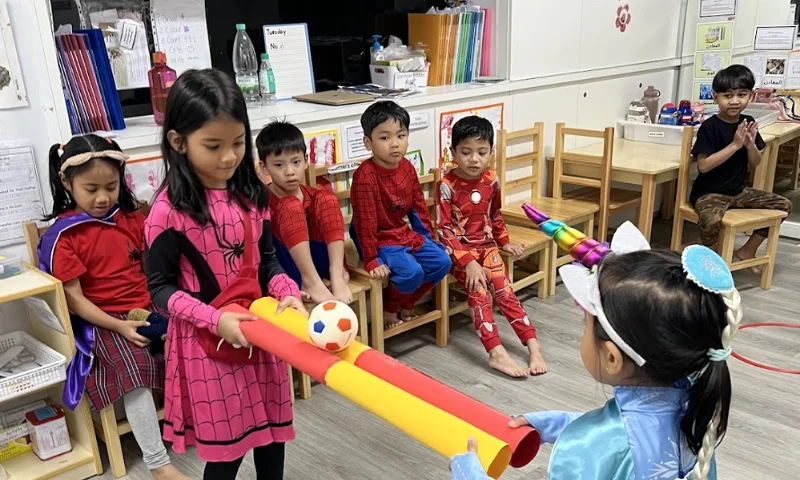
Every parent in Singapore faces a defining question before their child turns four: Should I enroll my child in a play-based preschool or an academic-focused one?
It sounds simple. But the answer shapes your child’s relationship with learning for years to come.
This blog unpacks the science, the philosophies, and the real-world outcomes behind both approaches. Whether you are exploring early childhood education for the first time or reconsidering your current choice, the research here will help you decide with confidence.
What Is Play-Based Learning in Early Childhood Education?
Play-based learning is not just “free time.” It is a structured, research-backed pedagogy where children learn through exploration, imagination, and interaction.
In a play based preschool Singapore environment, children develop skills through:
- Dramatic play (building empathy and language)
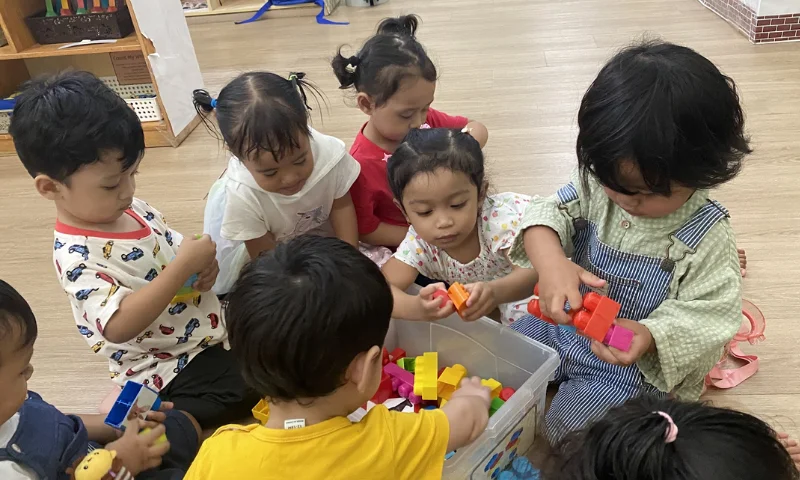
- Block construction (nurturing spatial reasoning and problem-solving)
- Sensory play (strengthening fine motor skills and scientific inquiry)
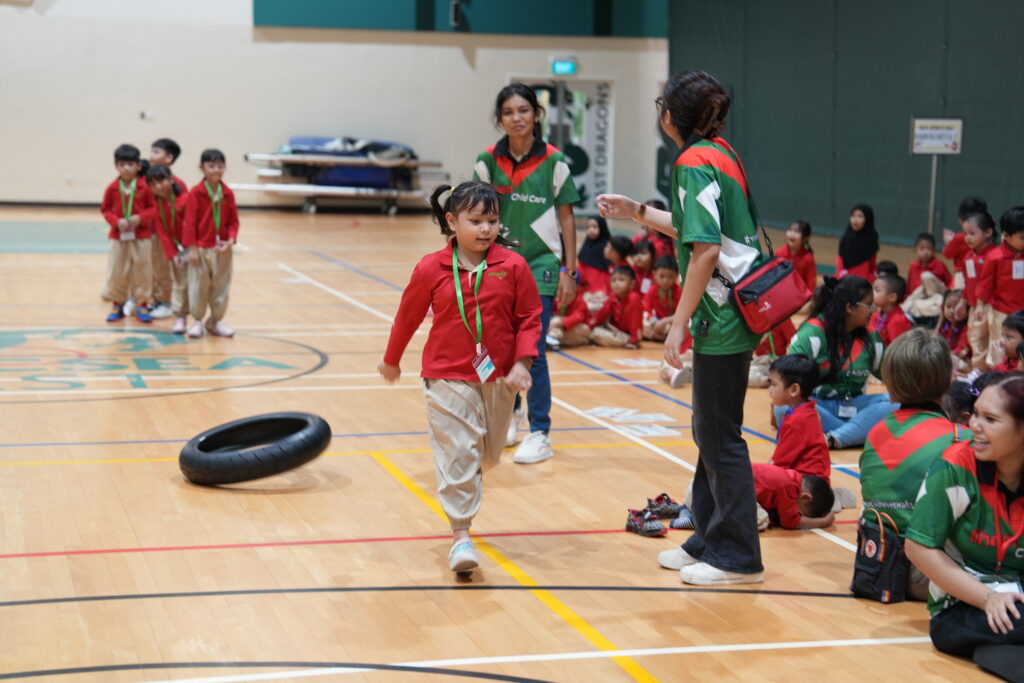
- Cooperative games (fostering social-emotional development)
The key distinction is that the child leads. Educators guide, observe, and scaffold — rather than direct and assess.
This approach is rooted in the theories of Jean Piaget, Lev Vygotsky, and Friedrich Froebel. It is also the cornerstone of the Montessori preschool Singapore model, which emphasises hands-on, child-directed discovery.
What Is an Academic Preschool?
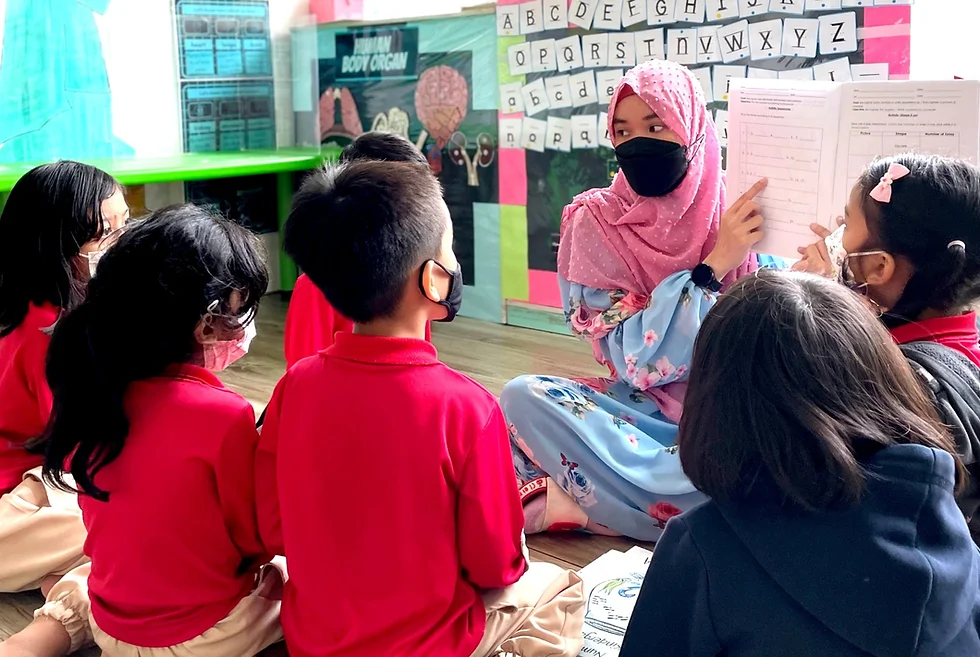
Academic preschools take a more structured, teacher-directed approach. Children learn phonics, numeracy, and literacy through worksheets, drills, and formal lessons.
The intent is to give children a head start — especially for the competitive primary school admissions landscape in Singapore.
These programmes often feature:
- Structured lesson plans with measurable outcomes
- Formal reading and writing readiness curricula
- Regular assessments and progress reports
- A focus on cognitive skill acquisition over social play
On paper, academic preschools seem logical. If children learn more early, they should do better later — right?The research, however, tells a far more nuanced story.
What the Research Actually Says
Play-Based Learning Produces Stronger Long-Term Outcomes
The landmark HighScope Perry Preschool Study followed children for decades. It found that children who attended play-based programmes had higher graduation rates, higher earnings, and lower rates of criminal activity compared to children in academic drill-based programmes.
A 2018 study in the journal Pediatrics found that direct instruction in preschool reduced children’s curiosity and exploratory behaviour. Children taught to find one solution stopped looking for others. Play-based learners kept exploring.
This matters enormously in the context of early childhood education Singapore, where employers and universities increasingly value creativity, adaptability, and collaborative thinking.
Academic Preschools May Create Short-Term Gains That Fade
Research from Vanderbilt University found that children from academic preschools showed stronger literacy and numeracy scores at kindergarten entry. But by second grade, those advantages had completely disappeared.
More concerningly, the same study found elevated levels of stress hormones and behaviour problems in children from highly academic preschool environments. The pressure was real — and measurable.
This “fade-out effect” is well-documented. Forcing abstract learning before a child’s brain is developmentally ready does not produce lasting benefits.
Executive Function: The Real Predictor of School Readiness
Perhaps the most compelling body of evidence centres on executive function — the set of mental skills that include working memory, cognitive flexibility, and impulse control.
Strong executive function in early childhood predicts academic success, social competence, and even physical health outcomes in adulthood.
Play-based learning builds executive function powerfully. When a child plays “pretend restaurant,” they must remember rules, manage emotions, negotiate roles, and adapt to changing scenarios. These are not trivial activities. They are neurological workouts.
Academic drills, by contrast, build procedural memory — but do little to develop the self-regulation and flexible thinking that executive function requires.
How Singapore’s Early Childhood Education Framework Aligns With Play
Singapore’s own Nurturing Early Learners (NEL) Framework, developed by the Ministry of Education, explicitly endorses a holistic, play-based approach for children aged 4 to 6.
The NEL framework focuses on six learning areas:
- Aesthetics and creative expression
- Discovery of the world
- Language and literacy
- Motor skills development
- Numeracy
- Social and emotional development
None of these domains are best addressed through rote memorisation or academic drilling. They are developed through purposeful, well-designed play experiences — which is exactly what a quality play based preschool Singapore is built to deliver.
The Role of Enrichment Classes in Preschool Development
Many Singapore parents supplement preschool with best enrichment classes for preschoolers to build specific skills. This is a smart strategy — when done right.
The best preschool enrichment classes Singapore parents seek should complement, not contradict, the play-based philosophy. Look for enrichment that:
- Prioritises hands-on discovery over passive instruction
- Builds on children’s natural curiosity
- Supports social interaction and teamwork
- Avoids excessive screen time or rote drilling
Whether it is art, music, storytelling, or science experiments, the best enrichment experiences feel like play — because they are built around how young children actually learn.
Considerations for Children With Special Needs
For families with children who require additional support, the question of learning approach becomes even more critical.
A well-designed special needs preschool Singapore or inclusive preschool Singapore setting uses play-based strategies precisely because they are naturally differentiating. Every child can participate at their own level. There is no single “right answer” that a child can fail to produce.
Research shows that inclusive, play-based environments significantly improve social integration, communication development, and self-confidence in children with developmental differences. The unstructured nature of play allows children to engage meaningfully without the pressure of standardised performance benchmarks.
If you are evaluating special education or inclusive schooling options, prioritise settings where play and sensory exploration are central — not supplementary.
Choosing the Right Preschool: A Practical Framework
Here is a simple guide for Singapore parents navigating this decision:
Choose a play based preschool Singapore if your child:
- Thrives on hands-on exploration
- Is naturally curious and imaginative
- Benefits from social learning environments
- Does not yet have a strong interest in formal literacy or numeracy
Consider a more structured programme if your child:
- Has demonstrated early readiness for reading or maths
- Responds well to routine and structured activities
- Has expressed interest in formal learning tasks
Questions to ask any preschool you visit:
- What percentage of the day is child-directed vs. teacher-directed?
- How do educators respond when a child resists a lesson?
- How is social-emotional development tracked and supported?
- What does a typical morning look like from the child’s perspective?
The answers will tell you everything you need to know.
You can also refer this post showing a complete guide on how to select preschool.
Play-Based vs. Academic: It Is Not Always Either/Or
The best early childhood education Singapore programmes have moved beyond the false binary. Leading preschools now integrate intentional academic scaffolding within play contexts.
A child building a Lego bridge is doing engineering. A child making a shopping list in pretend play is doing literacy. A child counting coins for a toy shop is doing numeracy. The content is academic. The vehicle is play.
This integrated approach — sometimes called “purposeful play” or “play with intent” — honours the developmental needs of young children while still meeting the literacy and numeracy benchmarks that parents and schools care about.
The question is not play or academics. It is how are academics being delivered?
Final Thoughts
The research is clear. Play is not the opposite of learning. Play is learning — at least for children under six.
Academic pressure at an early age does not create advantage. It creates anxiety. It narrows curiosity. And the gains it produces tend to disappear by the time a child reaches second or third grade.
A quality play based preschool Singapore gives your child the executive function, social intelligence, and intrinsic motivation to become a lifelong learner. That is a foundation no worksheet can build.
Choose the environment where your child can play deeply, explore freely, and be seen fully. That is where real learning begins.